336-477-3218 Mon–Sat · 7AM–6PM
· 5.0 Yelp
Home/ Sewer Repair/ Solutions/ Pipe Descaling

SOLUTION · CHARLOTTE, NC

Pipe Descaling that strips corrosion and restores full flow to cast-iron pipe.

Pipe Descaling uses rotating mechanical cutters and high-pressure water to strip decades of iron oxide scale and mineral deposits from the inside of cast-iron sewer lines. The result: a clean, full-diameter bore ready for normal service, or for a CIPP liner to bond to.

Call About Pipe Descaling: 336-477-3218 Quote My Pipe Descaling Job

Tell us what's going on

Free phone consultation. Flat-rate pricing. No upsells, ever.

We'll call you back within one business hour. No automated systems.

COMMON REASONS

When Pipe Descaling is the right call.

Scale-encrusted cast-iron pipe loses flow capacity slowly, then all at once. Pipe Descaling stops that progression at four critical points.

Common Pipe Descaling situations:

Pipe Descaling for cast-iron with heavy tuberculation

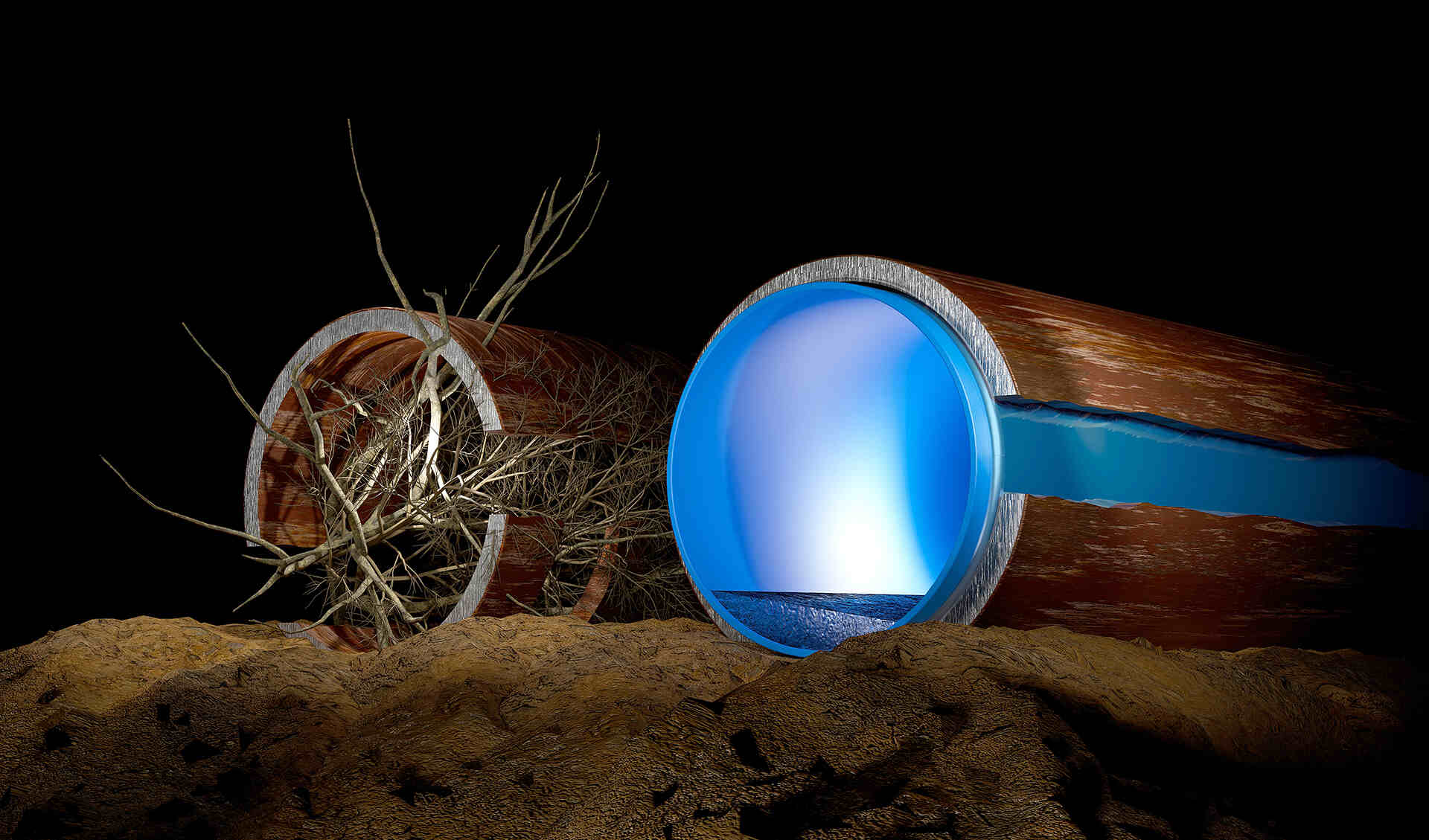
Iron oxide nodules, known as tuberculation, grow inward from the pipe wall over decades. Pipe Descaling's mechanical cutters break off the nodules and flush them clear without damaging the host pipe.

Pipe Descaling before CIPP liner installation

A tuberculated pipe wall won't allow a CIPP resin liner to bond correctly. Pipe Descaling is step one on every LiningWorks cast-iron CIPP job: clean wall, proper bond, long-life liner.

Pipe Descaling for reduced flow in older homes

A 1950s cast-iron main that once drained fine now backs up with moderate use. Pipe Descaling restores the original bore diameter, often 20–40% more usable pipe cross-section.

Pipe Descaling to diagnose pipe wall thickness before lining

Scale removal exposes the actual cast-iron wall. Pipe Descaling gives us, and you, a clear picture of remaining wall thickness before committing to a lining or replacement strategy.
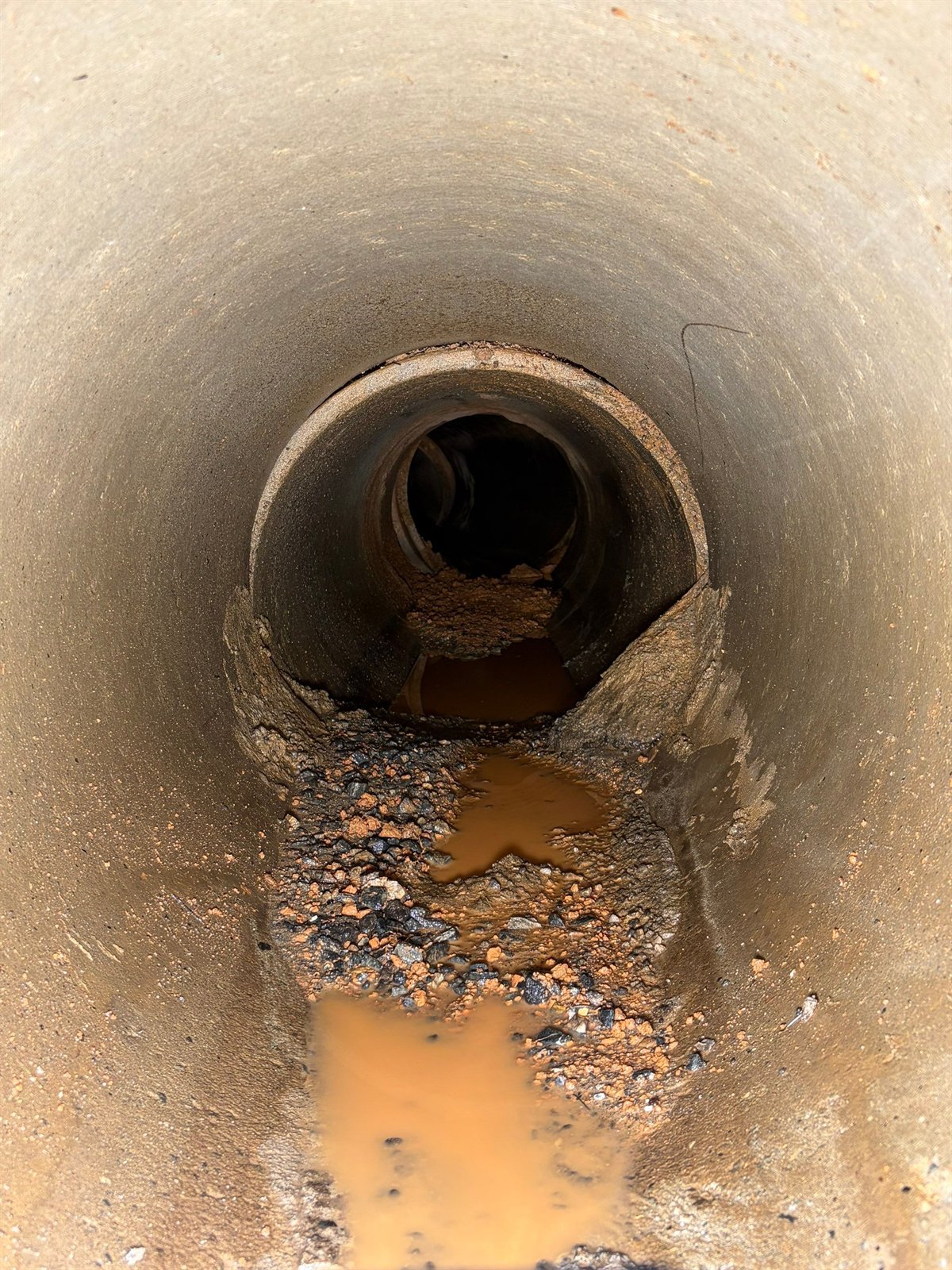
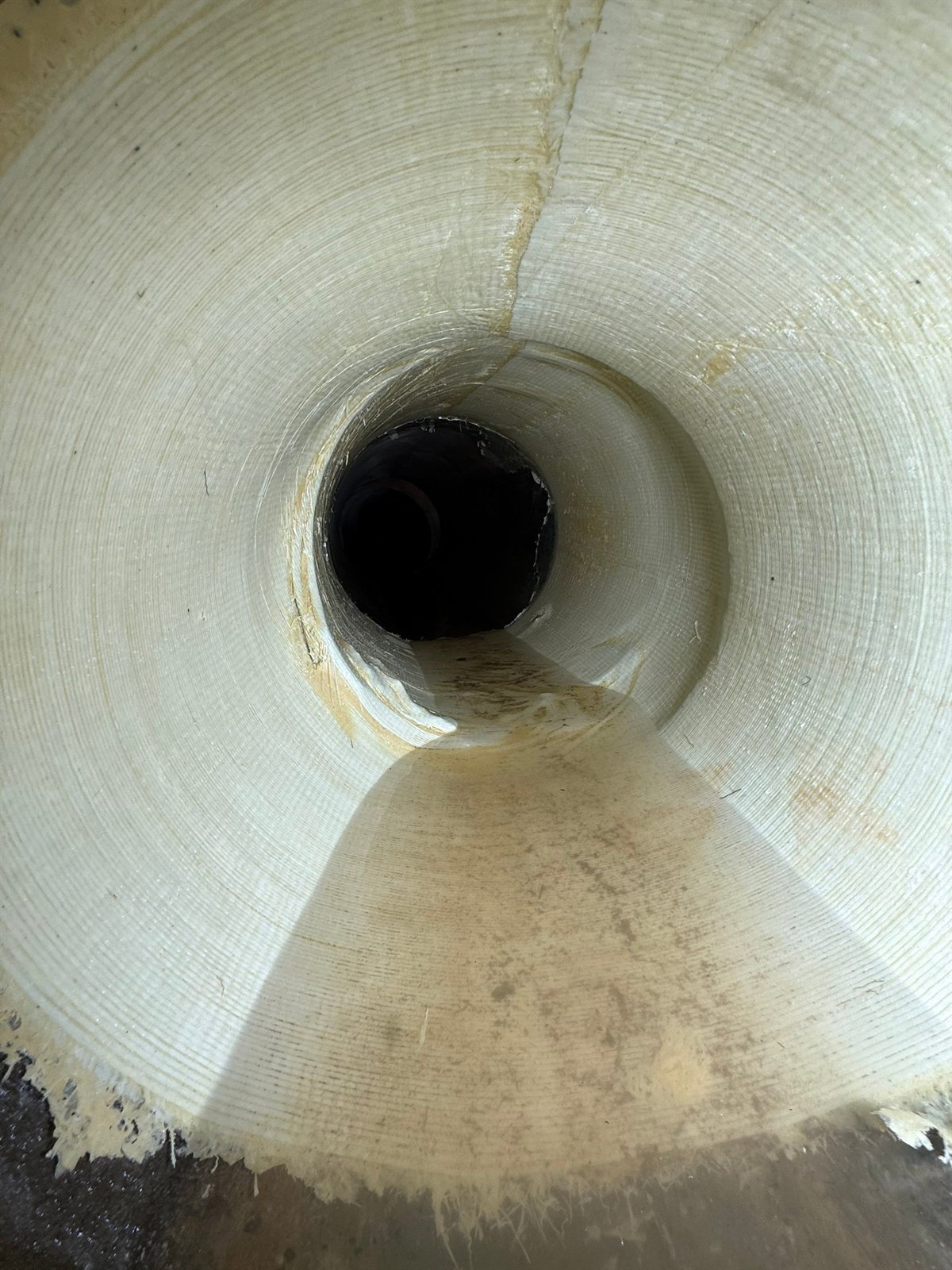
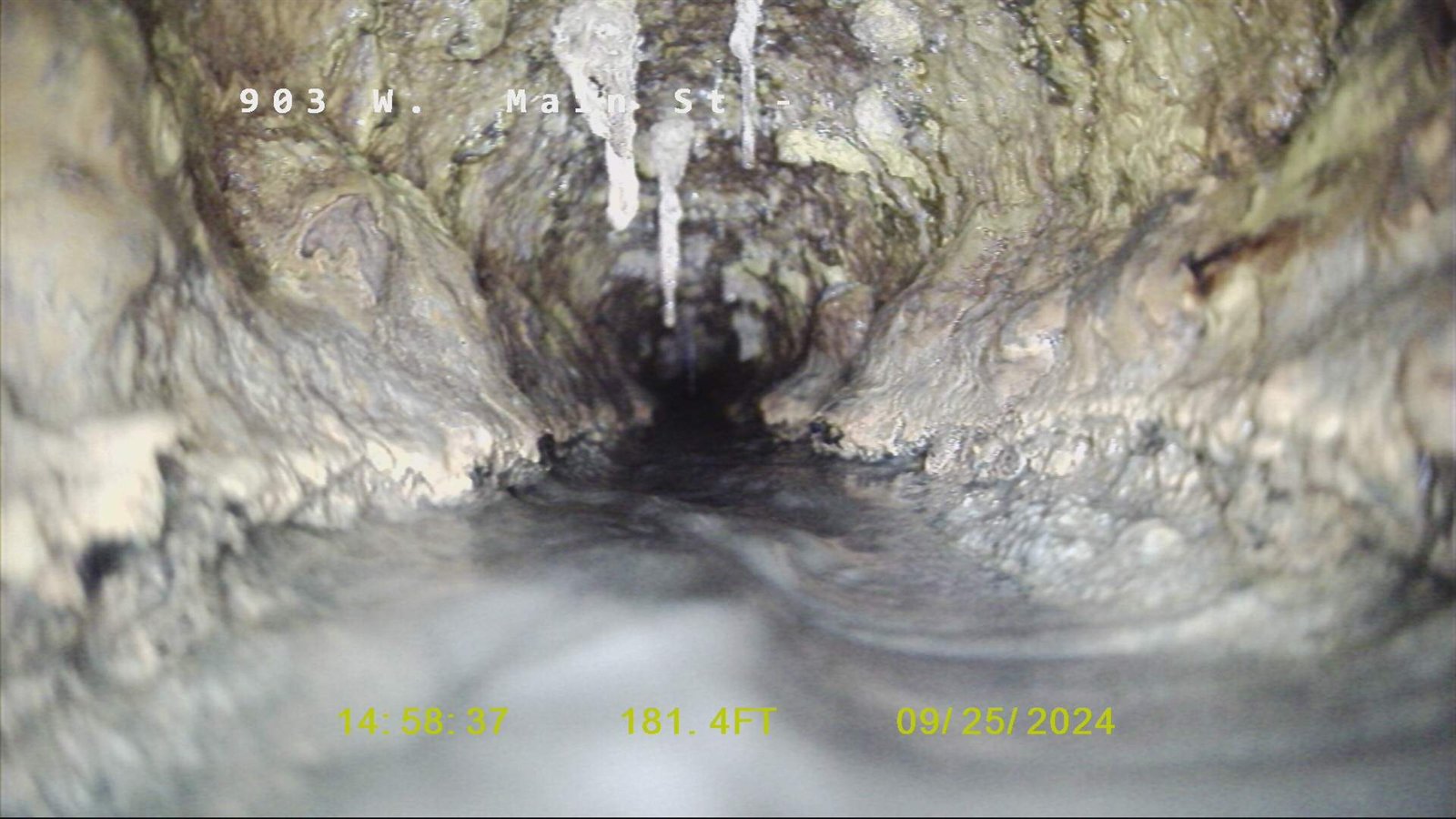
Heavily scaled cast-iron sewer pipe, a prime candidate for Pipe Descaling.
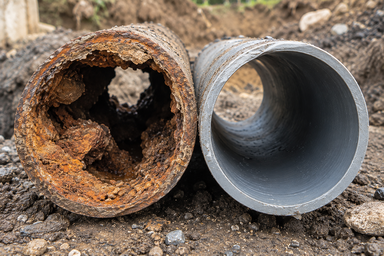
Cured CIPP liner in a cast-iron pipe after Pipe Descaling prep.

CATCH PROBLEMS EARLY

Why Pipe Descaling is a timing decision.

Scale grows slowly, then causes sudden blockage. Pipe Descaling scheduled before the scale gets thick enough to close the bore is dramatically cheaper than emergency service.

Watch for these Pipe Descaling triggers:

  • Pipe Descaling when camera shows 50% or more scale coverage
    When the camera reveals more than half the pipe wall coated in scale or nodules, Pipe Descaling is urgent, because total bore closure can follow months later with no warning.
  • Pipe Descaling before lining, not after a backup
    A Pipe Descaling job scheduled while the line still drains is a controlled service call. The same job done after sewage has backed up into the home is an emergency, and costs accordingly.
  • Pipe Descaling preserves a lining option
    Once scale closes the bore completely, the only option is replacement. Pipe Descaling while the bore is still open preserves the trenchless lining path, the less expensive of the two.
  • Pipe Descaling adds useful years to otherwise healthy cast iron
    A cast-iron pipe with scale but intact wall thickness is structurally sound. Pipe Descaling and CIPP lining can extend its service life by 50+ years, avoiding a full Sewer Line Replacement.

SERVICE PROCESS

How our Pipe Descaling process holds up.

Pipe Descaling is mechanical and precise: cutting too aggressively damages the host pipe; not enough and the liner won't bond. Four standards make every LiningWorks descaling job consistent.

Pipe Descaling starts with a diagnostic camera scope

Every Pipe Descaling job opens with an HD camera scope. We map scale thickness, distribution, and host pipe condition before choosing cutting speed and nozzle type.

Pipe Descaling uses mechanical cutting chains first

Rotating chain-flail cutters break off heavy tuberculation and scale nodules. Chain-flail Pipe Descaling is followed by a hydro-jetting flush to clear the broken material downstream.

Pipe Descaling follows with a Hydro Jetting polish pass

After mechanical descaling, we jet the line at high pressure to strip residual scale film and flush all debris out to the city main. The result is a clean, bondable pipe wall.

Pipe Descaling is verified with a post-process camera scope

After descaling and jetting, we run the camera again. You see the bare cast-iron wall on screen, confirm bond readiness, and receive both scopes on a USB drive.
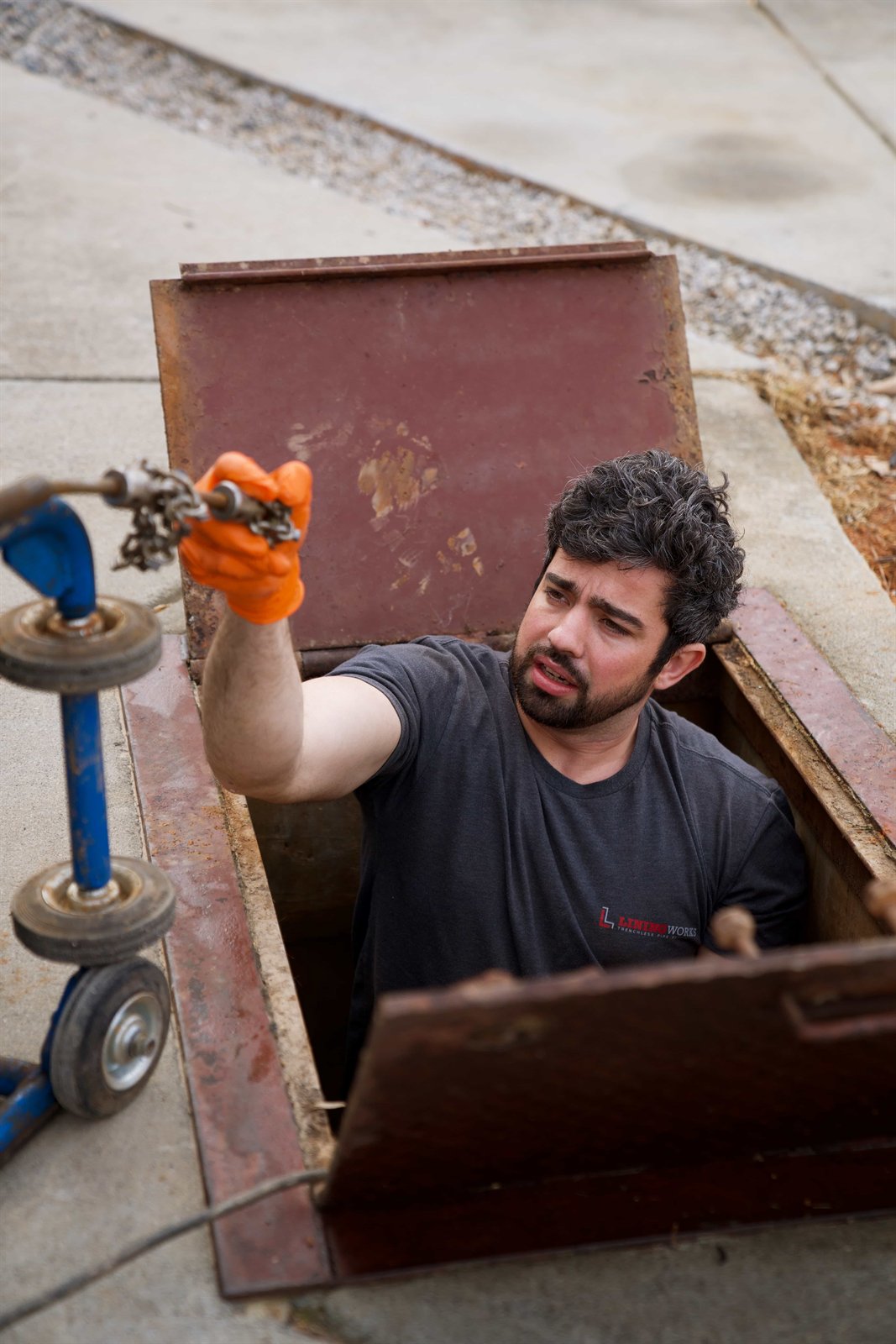
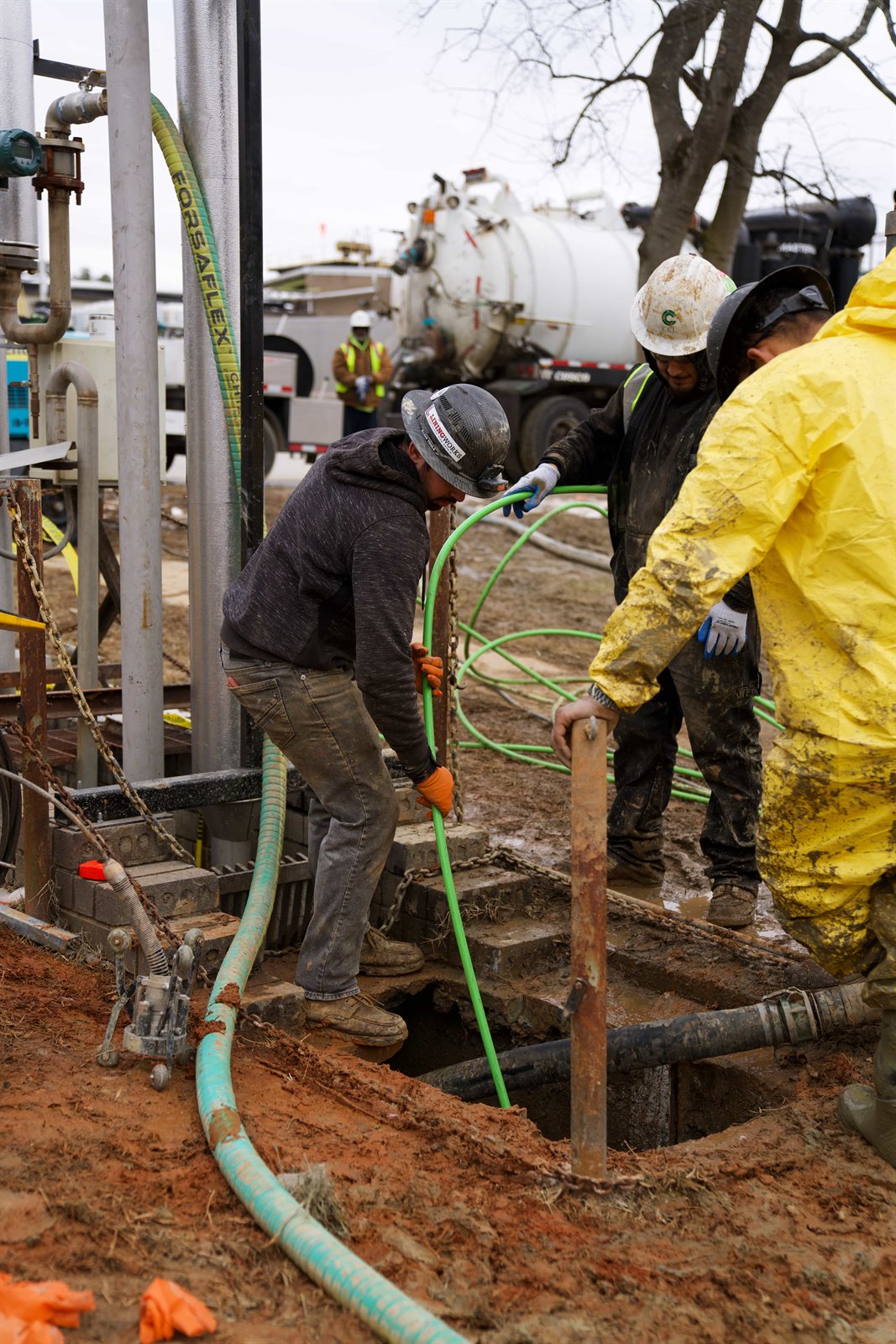
LiningWorks technician reviewing Pipe Descaling camera results in Charlotte.

SIMPLE PROCESS

The Pipe Descaling process, step by step.

Same five-step Pipe Descaling sequence on every residential job, whether the run is 28 feet or 280 feet. Here's how it actually works.

Camera scope before Pipe Descaling.
Step 1

Camera-scope the line to map scale distribution before Pipe Descaling.

HD sewer camera maps scale thickness and host pipe condition from cleanout to city tap. The Pipe Descaling plan (cutter selection, number of passes, jetting pressure) is built from this footage.

Talk to a Camera-scope Tech
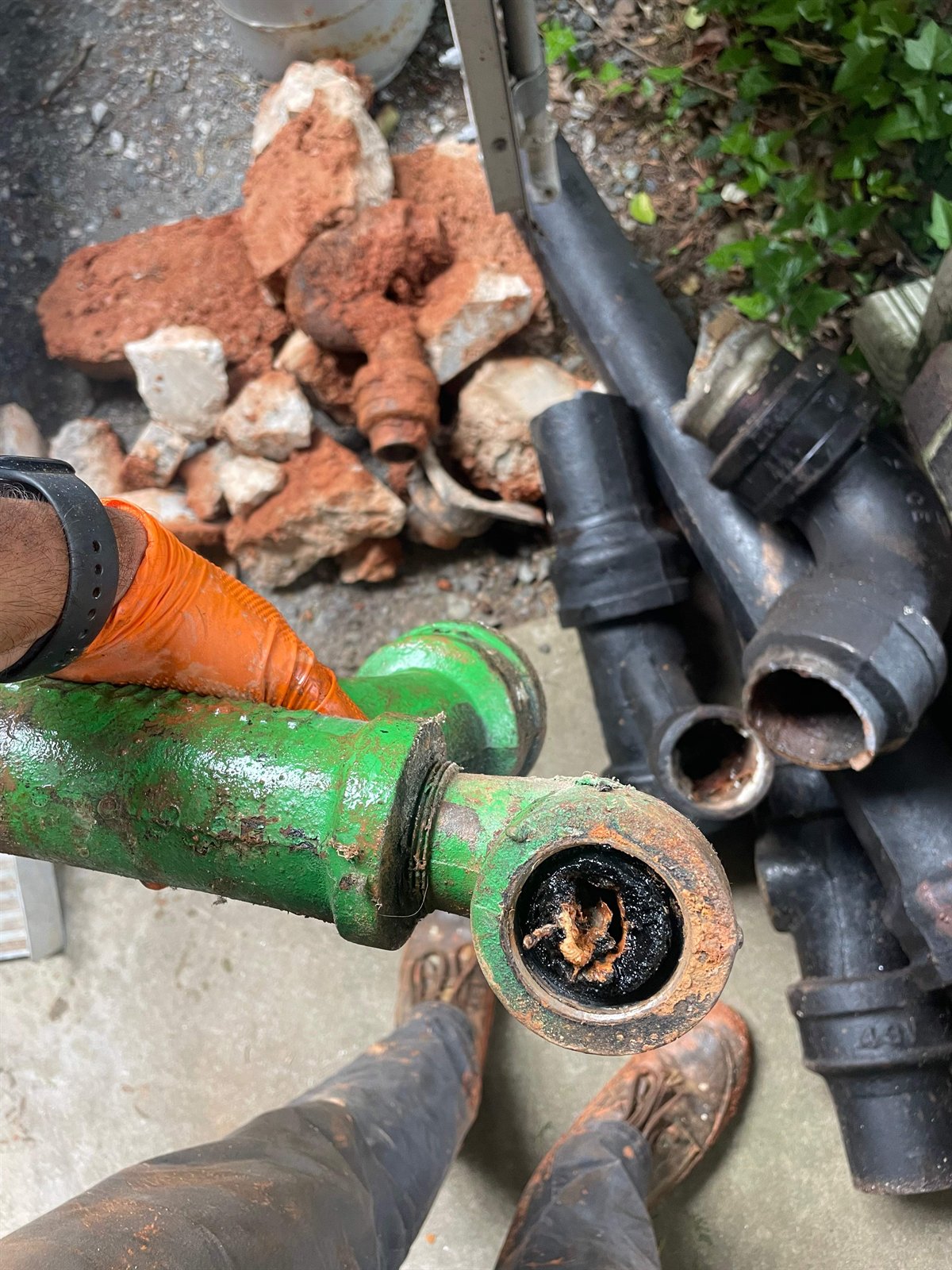
Scale-encrusted pipe before Pipe Descaling.
Step 2

First Pipe Descaling pass with rotating chain-flail cutters.

Rotating chain-flail cutters are fed into the line from the cleanout. The Pipe Descaling machine drives upstream to downstream, breaking heavy tuberculation and scale nodules off the cast-iron wall.

Talk to a Camera-scope Tech
Hydro Jetting flush during Pipe Descaling.
Step 3

Hydro-jet the line to flush Pipe Descaling debris.

After the mechanical cutting pass, we hydro-jet the line at high pressure. All scale debris flushed downstream to the city main. No broken material left in the pipe to re-accumulate.

Talk to a Camera-scope Tech
Second Pipe Descaling pass if needed.
Step 4

Second Pipe Descaling pass if heavy buildup remains.

For severely scaled lines, a second mechanical Pipe Descaling pass follows the first flush. We re-run the camera after each pass to confirm bore clearance before proceeding.

Talk to a Camera-scope Tech
Camera verify after Pipe Descaling.
Step 5

Camera-verify the finished Pipe Descaling result end to end.

Post-descaling camera confirms a clean, full-diameter, bare cast-iron wall. You watch the result on screen, sign off, and leave with the before/after videos. If CIPP lining is next, the pipe is bond-ready.

Talk to a Camera-scope Tech
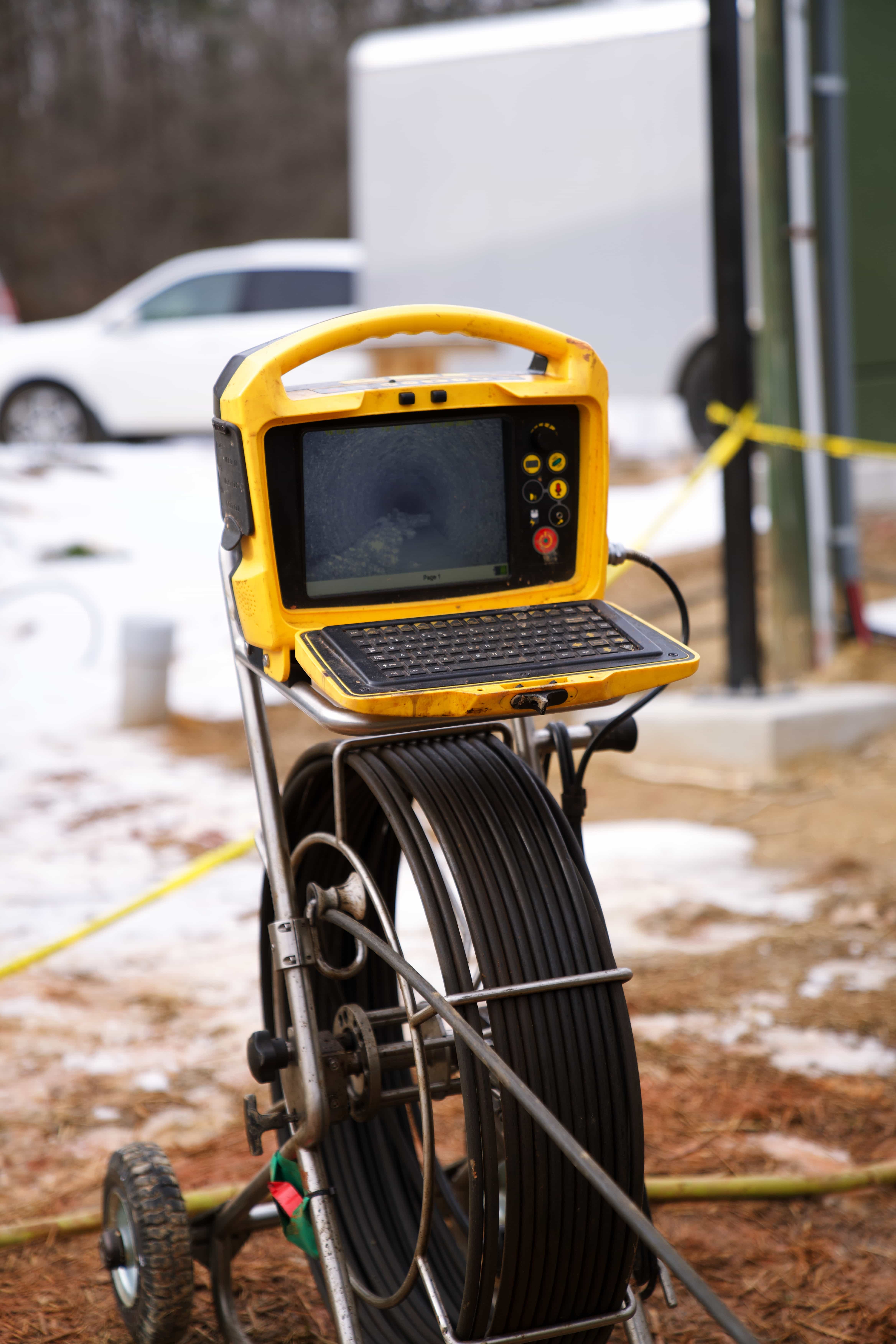
LiningWorks camera rig set up for Pipe Descaling inspection in Charlotte.

BEFORE & AFTER

Pipe Descaling, before and after: a Plaza Midwood case.

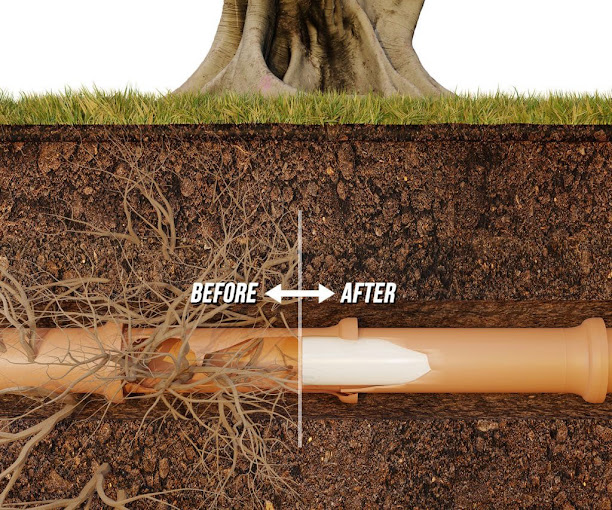
A 1948 Plaza Midwood bungalow with 36 feet of cast-iron main. Camera showed the bore was down to 40% of original diameter from decades of iron oxide scale. Our Pipe Descaling team ran two mechanical passes and a jetting flush, restoring the bore to 97% of original diameter in three hours.

The post-Pipe Descaling camera also showed the cast-iron wall was structurally intact throughout. We quoted a CIPP liner while on site, and the homeowner booked it the same week. Total service life extension: 50+ years from a line that was on the verge of emergency replacement.

Quote My Pipe Descaling

PIPE DESCALING IN ACTION

See Pipe Descaling work on a real Charlotte job.

More Pipe Descaling videos on YouTube →
WHAT HOMEOWNERS SAY

Real results. Real reviews.

WHY HOMEOWNERS TRUST US

What you get when LiningWorks runs your Pipe Descaling.

Pipe Descaling is a specialty service that requires the right equipment and judgment. We bring both on every job.

NC-licensed Pipe Descaling crew

NC Plumbing License #16952. Every Pipe Descaling job is run by the same licensed brothers: the guys who did the camera scope are the guys running the cutters.

Camera scopes before and after every Pipe Descaling job

Pre- and post-Pipe Descaling camera scopes are standard. You see the scale before we start and the clean pipe wall when we finish, both saved to a USB drive.

Flat-rate Pipe Descaling pricing

The Pipe Descaling quote covers mechanical cutting, hydro-jetting, both camera scopes, and USB footage. No hourly billing: the price you see is the price you pay.

Honest Pipe Descaling assessment: lining vs. replacement

After every Pipe Descaling job, we give you a straight camera-based recommendation: lining extends the life, replacement is warranted, or the pipe is fine for now. No upsell, just what the footage shows.
LiningWorks technician in front of Pipe Descaling service truck in Charlotte.

FAQ

Pipe Descaling: Frequently Asked Questions

Short, honest answers, the same way we'd explain it on the phone.

Pipe Descaling is a two-stage process: mechanical chain-flail cutters strip iron oxide scale and mineral nodules from cast-iron sewer pipes, followed by a Hydro Jetting flush to clear all debris. The result is a restored pipe bore and a clean wall ready for CIPP lining if needed.

Most residential Pipe Descaling jobs in Charlotte complete in two to four hours. Heavily scaled pipes may require two mechanical passes, which can extend the service call to five or six hours.

If your pipe is PVC or ABS, Hydro Jetting is usually sufficient. If your pipe is cast iron, especially in homes built before 1970, Pipe Descaling's mechanical cutting is often necessary to remove the hard iron oxide nodules that Hydro Jetting alone cannot dislodge.

Pipe Descaling performed by a trained crew after a pre-descaling camera scope does not damage structurally sound cast iron. We select cutting speed and cutter type based on pipe condition observed on camera, and stop if the wall shows signs of perforation risk.

Yes, on cast-iron pipe. A tuberculated or scale-coated pipe wall prevents the CIPP resin from bonding correctly. Every LiningWorks CIPP lining job on cast iron begins with a Pipe Descaling pass to ensure a clean, bondable surface.

Still have questions? Call us at 336-477-3218 — same-week service, Mon–Sat 7AM–6PM.

FROM THE BLOG

Plain-English advice from your neighbors.

Stories, signs to watch for, and what actually works underground, straight from our crews.

Read all posts

OUR LOCATIONS

Two local offices, ready when you need us.

See All Service Areas
Mocksville, NC
LiningWorks
2200 Davie Academy Rd
Mocksville, NC 27028
336-477-3218
Charlotte, NC
LiningWorks
6630 E W.T. Harris Blvd, Suite K2
Charlotte, NC 28215
336-477-3218