
C
Commercial Property Manager
★★★★★
“The trenchless approach saved us from closing the parking lot for three weeks. LiningWorks completed the whole thing in a day and a half. The camera footage at the end showed a perfect installation.”
CIPP lining for large-diameter pipes (12 inches and above) requires different equipment, heavier liner material, and more precise installation than residential pipe lining. LiningWorks installs structural CIPP liners in large-diameter commercial, municipal, and industrial pipe systems across the Charlotte region.
The first call costs nothing. Flat-rate pricing. No upsells, ever.
CIPP lining installs a structural liner inside an existing pipe without excavation. For pipes 12 inches and above, the liner is specified to handle full structural loading (soil weight, traffic loading, and hydrostatic pressure) independent of the host pipe.
The process is the same as residential CIPP but with heavier felt liner, longer cure times, and larger inversion equipment. LiningWorks scopes the full run before specifying liner thickness, confirming access points, and developing the installation sequence.
Every large-diameter CIPP installation finishes with post-installation CCTV camera verification of the full liner run, confirming bond, joint coverage, and absence of voids before the project is closed out.
Get a Large-Diameter Assessment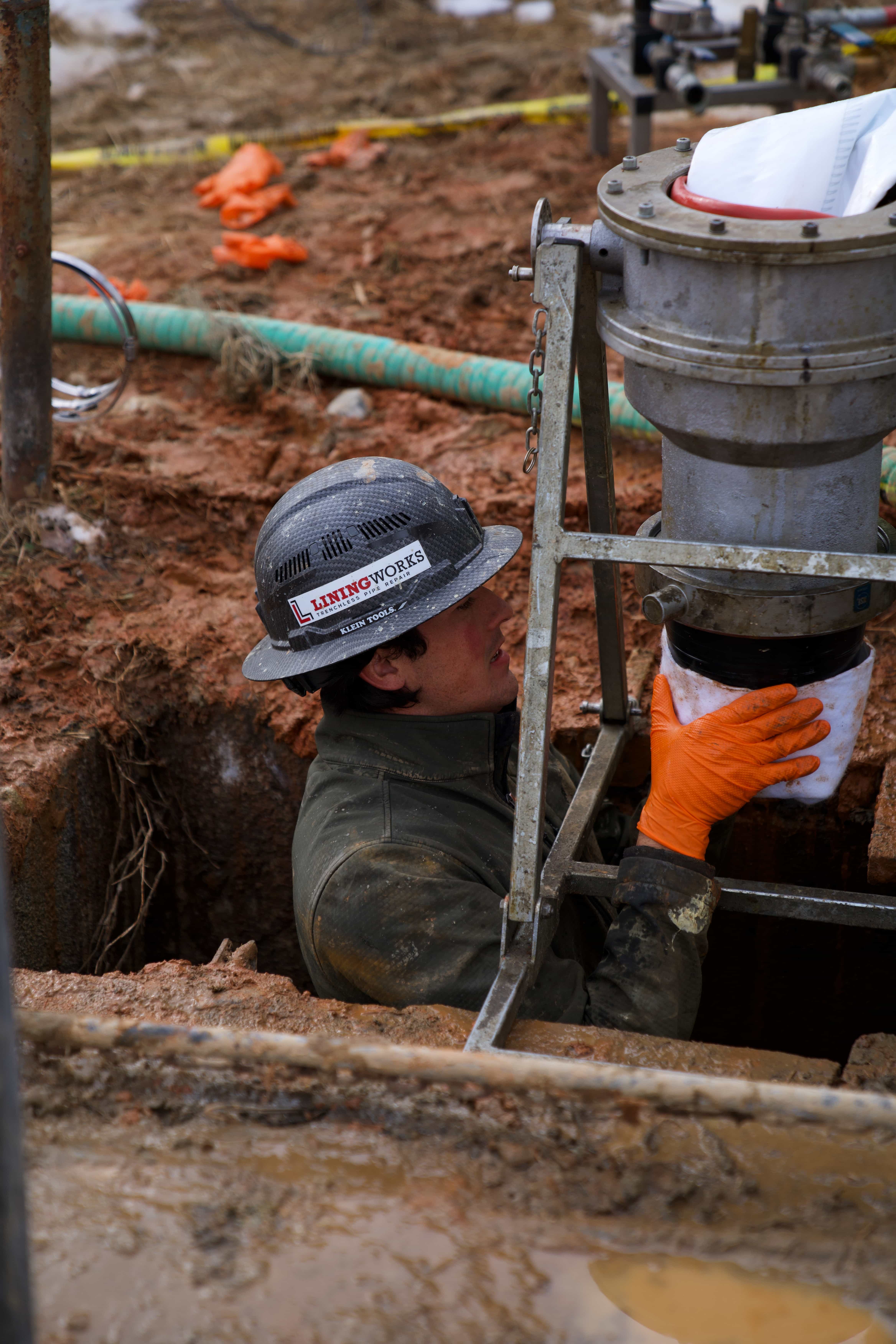
Watch a large-diameter CIPP liner installation: from access setup through liner inversion, heat cure, and post-installation CCTV verification of the completed liner.
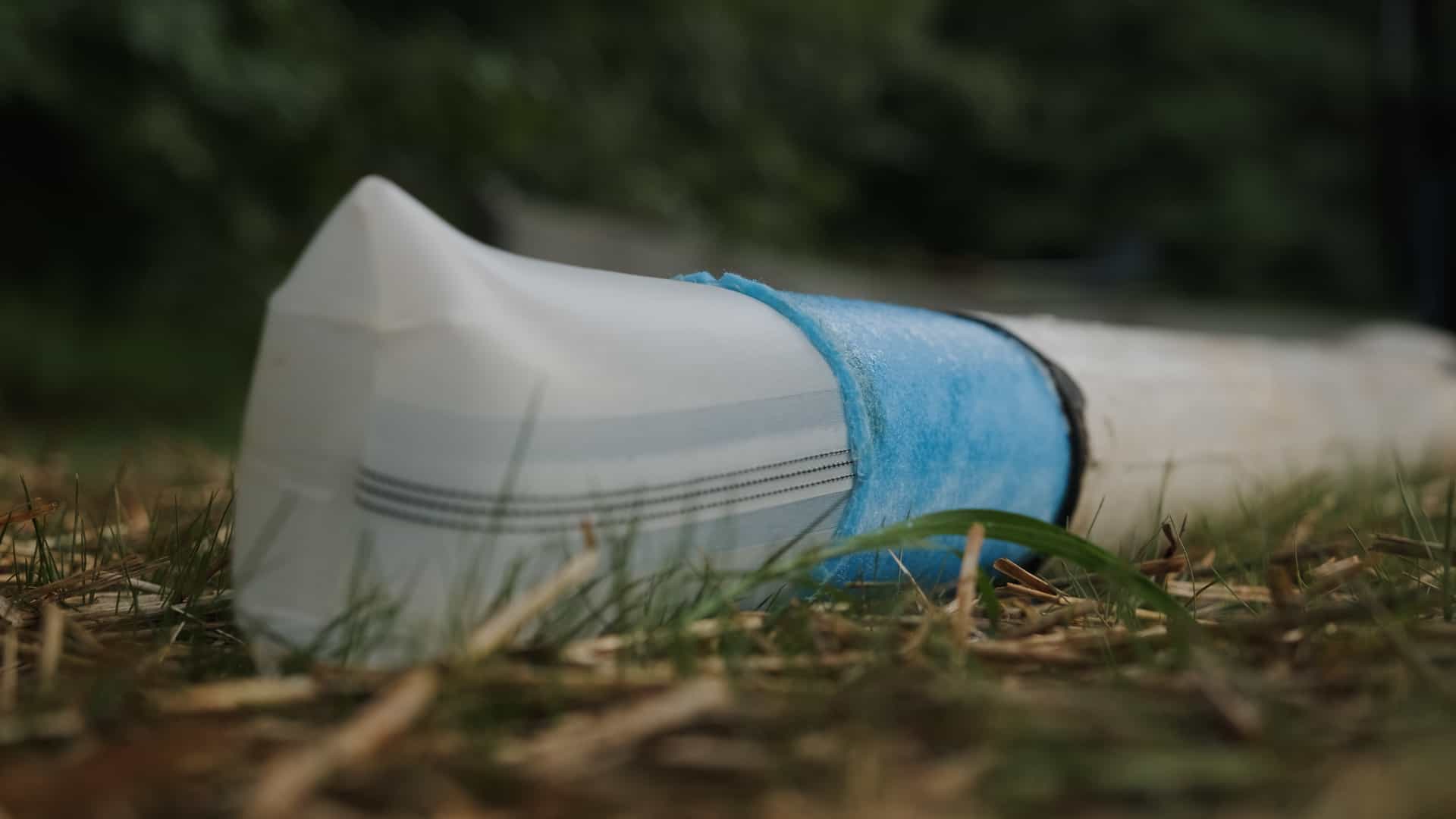
Large-diameter CIPP lining applies across a range of pipe materials, depths, and service environments, including systems that small-diameter lining equipment cannot reach.
Large-diameter CIPP lining is not residential lining at scale. It requires different equipment, liner specification, and installation methodology.
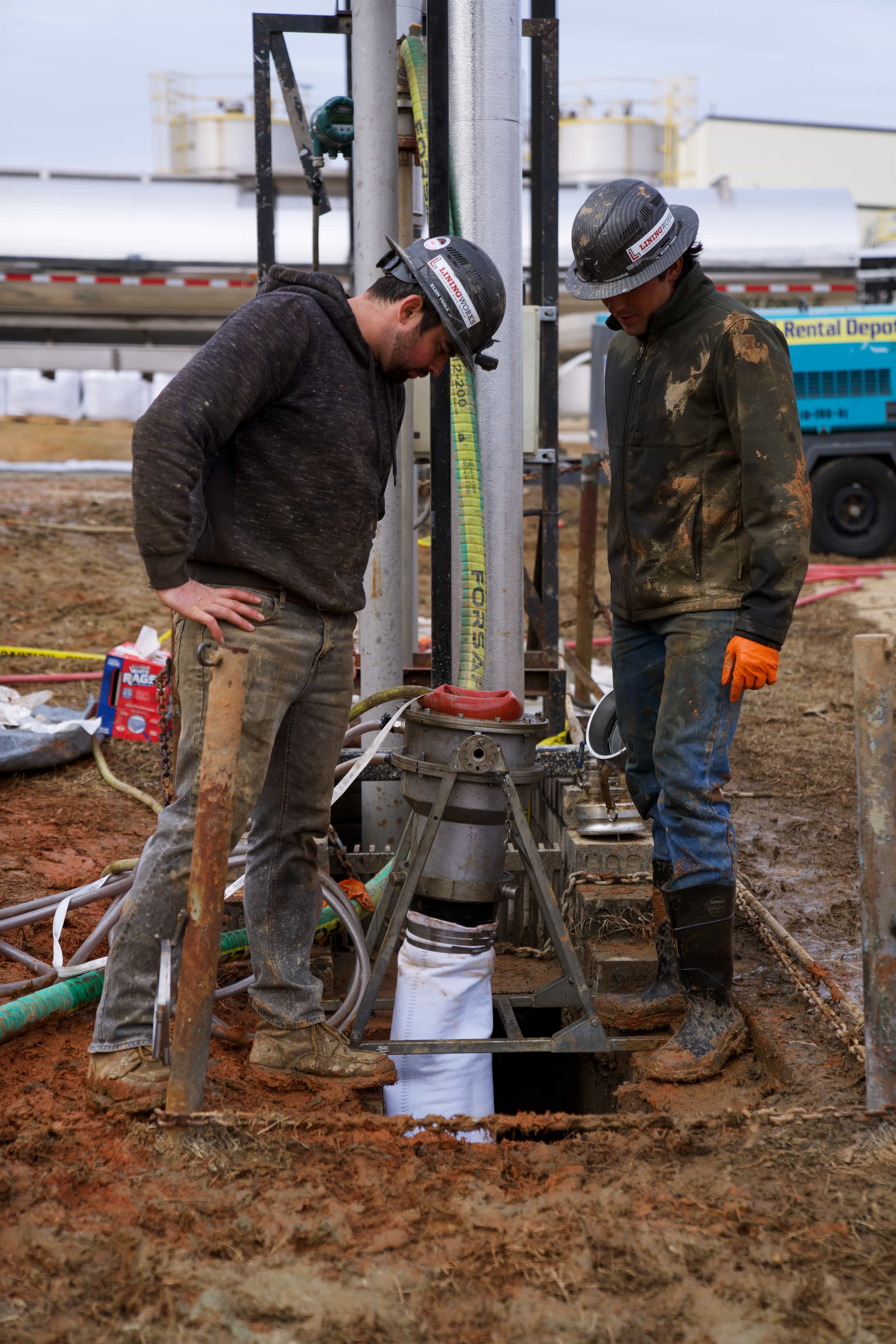
A 24-inch RCP storm drain under a heavily trafficked commercial parking lot showed advanced joint separation, significant root intrusion, and early-stage wall corrosion on camera inspection. Open-cut replacement would have required demolishing and repaving a substantial section of the lot.
LiningWorks installed a structural CIPP liner through the full 110-foot run, accessed entirely from manholes at each end. Post-installation camera confirmed full bond throughout. The parking lot surface was never disturbed.
“The trenchless approach saved us from closing the parking lot for three weeks. LiningWorks completed the whole thing in a day and a half. The camera footage at the end showed a perfect installation.”
Large-diameter pipe rehabilitation requires specific equipment, engineering, and project management experience. LiningWorks is equipped for it.

Camera assessment first. We confirm liner specification before quoting.
336-477-3218, Mon–Sat 7AM–6PM. Knowing the pipe diameter and any existing inspection data helps us scope the right assessment.
We scope the full run, measure the pipe, identify access points, and develop a liner specification based on actual field conditions.
We provide a written fixed-price proposal and install the liner with our NC-licensed crew, delivering full post-installation documentation at project close.
Stories, signs to watch for, and what actually works underground, straight from our crews.
 Drain Cleaning
Let's talk about something nobody puts on their vision board: slow drains.
Read more Sewer Repair
Let us paint you a picture. You walk into your house after a long day. You expect the comforting smell of. well. not sewage.
Read more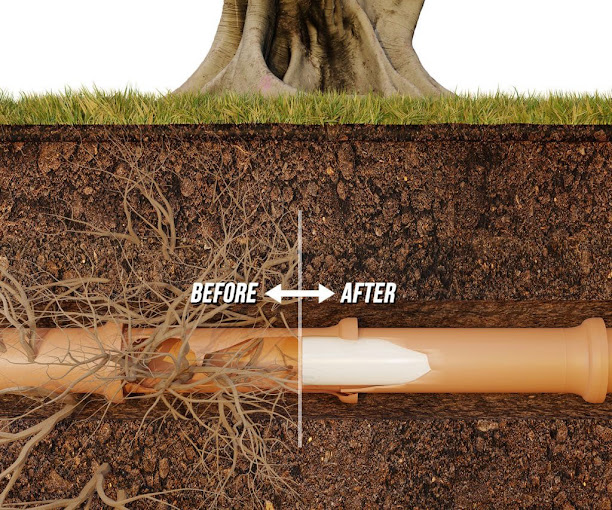 Sewer Repair
Let's talk about something most homeowners would rather not: what's going on under your lawn. You've got this quiet, shady maple out front. Maybe you've even named it, something cha
Read more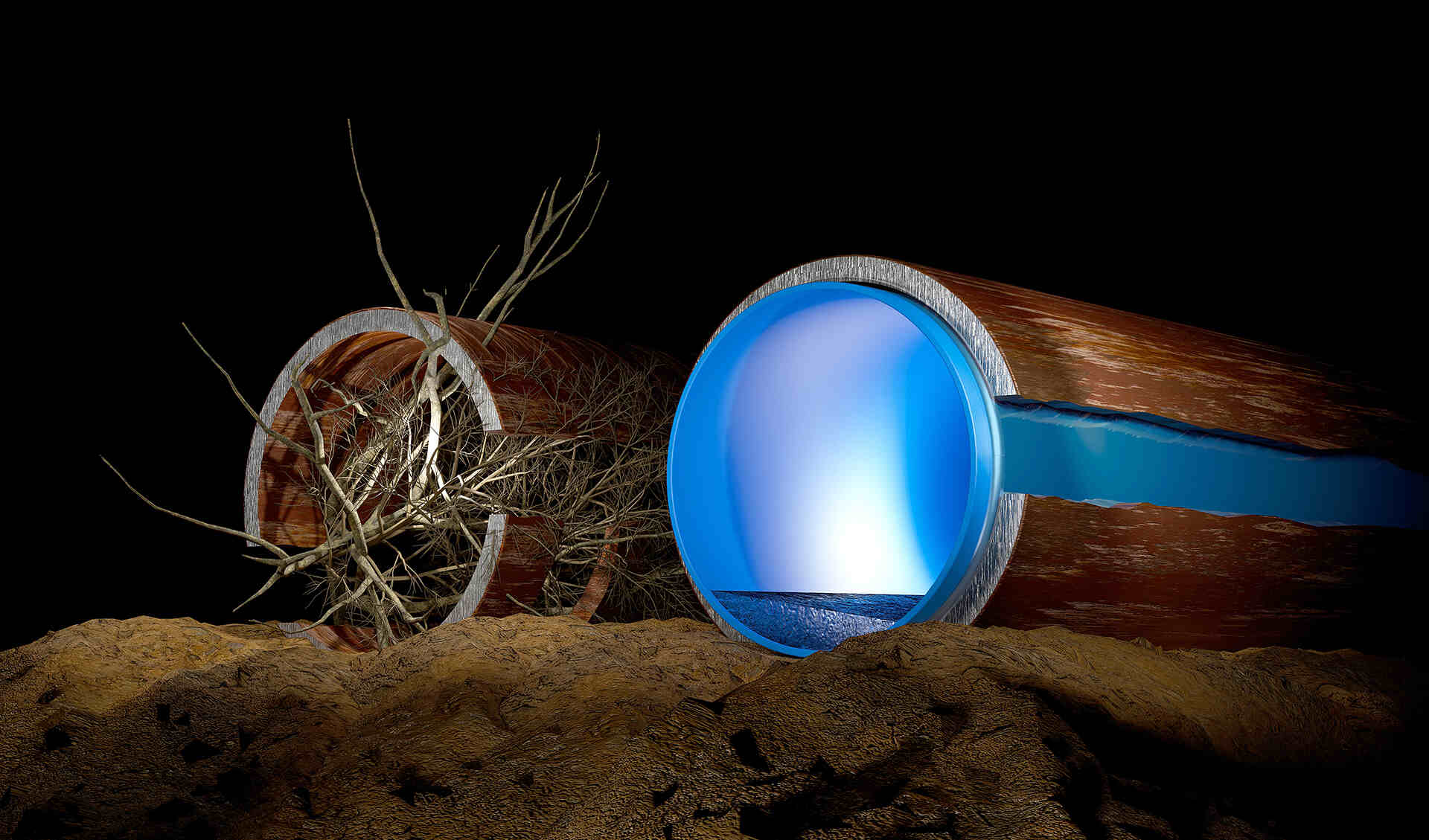 Trenchless Repair
If you're reading this, chances are something's not quite right under your feet. Maybe the drains are backing up. Maybe the yard smells like something crawled down there and gave u
Read more