Storm drain structural corrosion reduces wall thickness with every storm cycle — the window to rehabilitate closes over time.
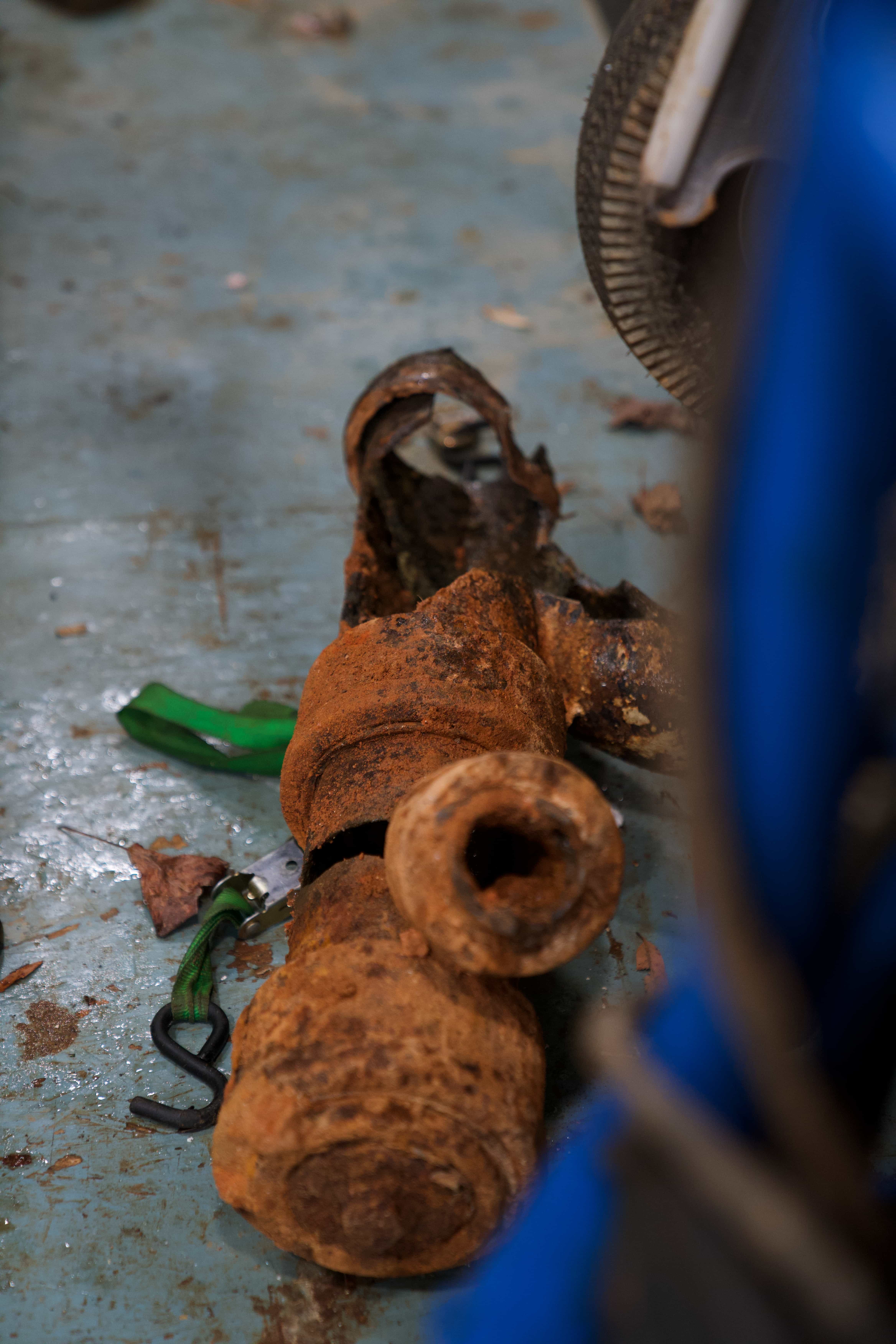
Hydrogen sulfide corrosion in concrete storm drain pipes and abrasion erosion in systems carrying high-velocity sediment-laden stormwater both reduce pipe wall thickness progressively — decreasing structural capacity until the pipe fails completely. CCTV camera inspection quantifies wall loss and determines whether CIPP lining can still restore structural integrity.
Free phone consultation. Flat-rate pricing. No upsells, ever.
We'll call you back within one business hour. No automated systems.
HOW STORM DRAIN PIPE CORRODES
The corrosion and erosion mechanisms most common in storm drain systems.
Storm drain structural corrosion follows specific mechanisms — each associated with particular pipe materials and operating conditions.
H2S corrosion in concrete storm drains receiving contaminated runoff
Storm drain systems receiving runoff with organic contamination — from commercial food processing, agricultural areas, or sanitary cross-connections — can generate hydrogen sulfide conditions that corrode concrete pipe crowns.
Abrasion erosion at pipe inverts from high-velocity stormwater
Storm drain systems with steep gradients carrying sand and gravel at high velocity during peak storm events experience progressive abrasion erosion at the pipe invert — reducing wall thickness most severely at the 6 o'clock position.
Electrochemical corrosion in CMP in acidic or high-chloride soil
Corrugated metal pipe in aggressive soil environments corrodes electrochemically — losing wall thickness at a rate that depends on soil chemistry, drainage conditions, and pipe age.
Carbonation and sulfate attack in concrete pipe in aggressive groundwater
Concrete pipe in areas with sulfate-bearing or aggressive groundwater can experience carbonation and sulfate attack — progressive deterioration of the concrete matrix that reduces wall thickness from the exterior.
When corrosion-damaged storm drain pipe can still be rehabilitated trenchlessly.
Storm drain corrosion rehabilitation through CIPP lining is viable as long as sufficient structural geometry remains to support liner installation and positioning.
Camera and inspection determine remaining wall thickness and CIPP viability
Pre-installation inspection assesses remaining wall thickness and structural condition — confirming whether CIPP lining is viable and what liner thickness is required for the measured deterioration.
Structural CIPP liners are rated for zero host pipe contribution
For heavily corroded storm drain pipe, structural CIPP liners are specified to carry full loading with no contribution from the deteriorated host pipe — extending the trenchless rehabilitation window to include severe corrosion conditions.
CIPP liner materials are resistant to the corrosion mechanisms attacking the host pipe
CIPP liner resins are chemically resistant to hydrogen sulfide, sulfuric acid, and the other chemical environments causing host pipe corrosion — providing a corrosion-resistant interior after rehabilitation.
Storm drain pipe types and environments with the highest corrosion risk.
Corrosion risk in storm drain systems is highest in specific pipe materials and operating environments — particularly aging CMP and concrete systems in aggressive environments.
CMP culverts past design life in corrosive soil or water environments
CMP culverts installed before 1990 are approaching or past design life in most soil environments. Those in acidic or high-chloride conditions have often exceeded design life and are at immediate risk of wall-loss failure.
Concrete storm drain pipe in areas with sanitary cross-connection history
Concrete pipe that has historically received sanitary wastewater through cross-connections has experienced H2S exposure that is not reflected in design-life calculations — accelerating crown corrosion beyond typical aging rates.
Steep-gradient concrete storm drain systems in areas with exposed soil runoff
Concrete storm drain systems in commercial areas with construction activity, unpaved surfaces, or exposed soil in the contributing area carry high-abrasion sediment loads during storm events — concentrating erosion at the invert.
Large-diameter concrete pipe in municipal systems with known sulfide conditions
Large-diameter municipal storm drain mains in low-lying areas with long hydraulic residence times can develop sulfide conditions similar to sanitary sewer — generating crown corrosion in systems not typically associated with H2S exposure.
Municipal CMP storm culvert — structural CIPP lining avoids emergency replacement under collector road.
A municipal public works department in the Triad region had a 30-inch CMP culvert under a collector road that had developed severe invert corrosion — wall thinning across approximately 65% of the pipe invert, confirmed by camera inspection and manual inspection from the headwalls.
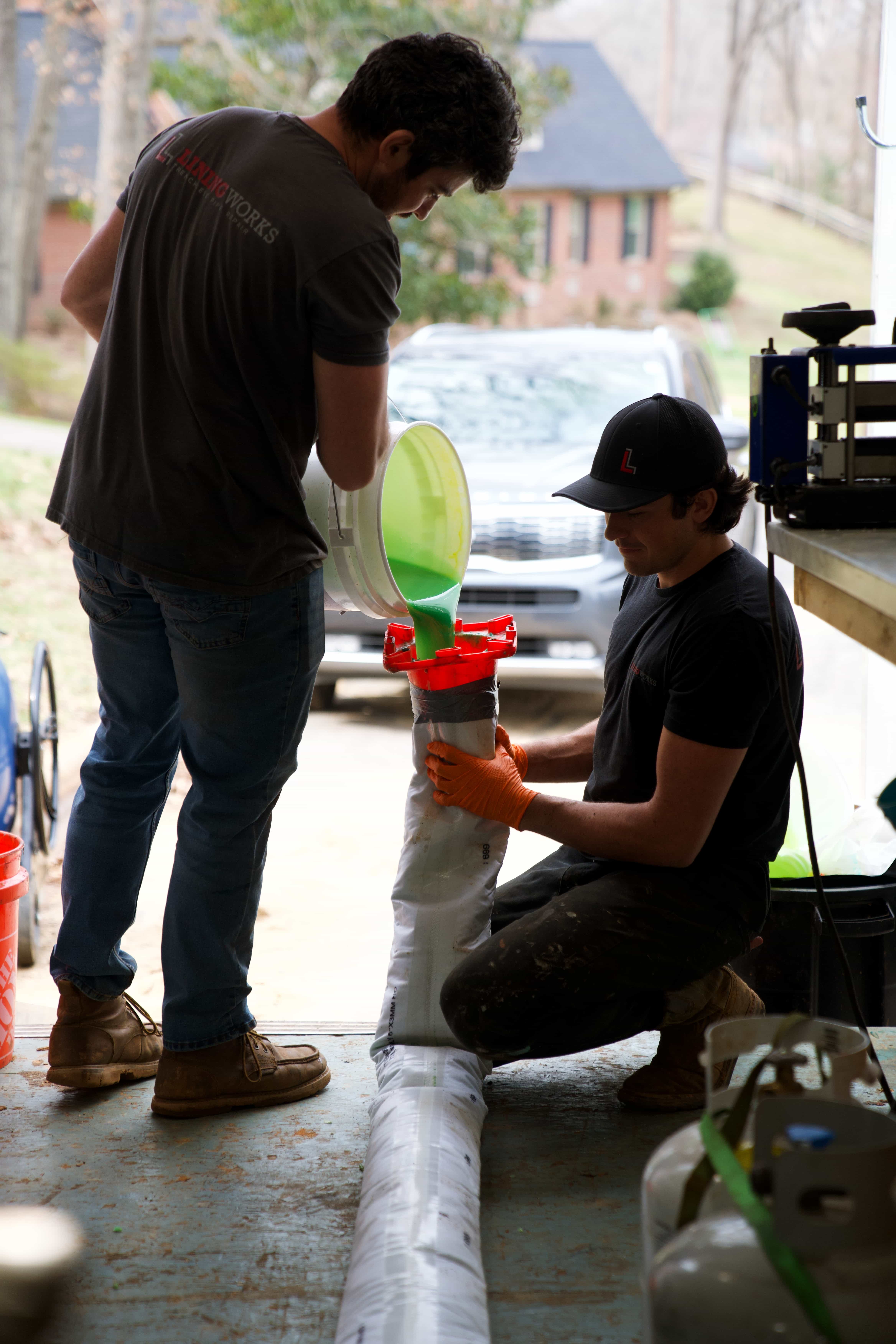
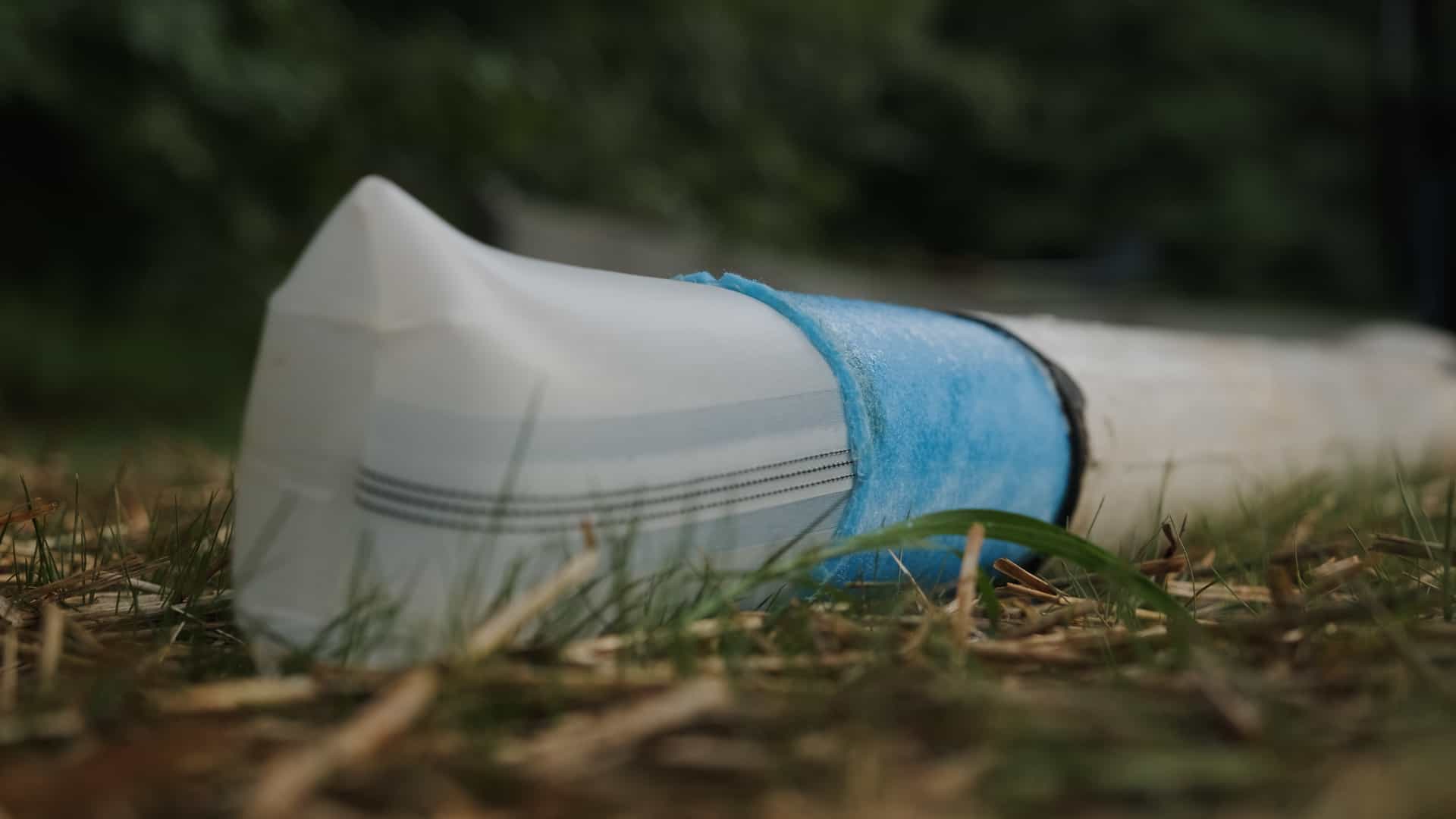
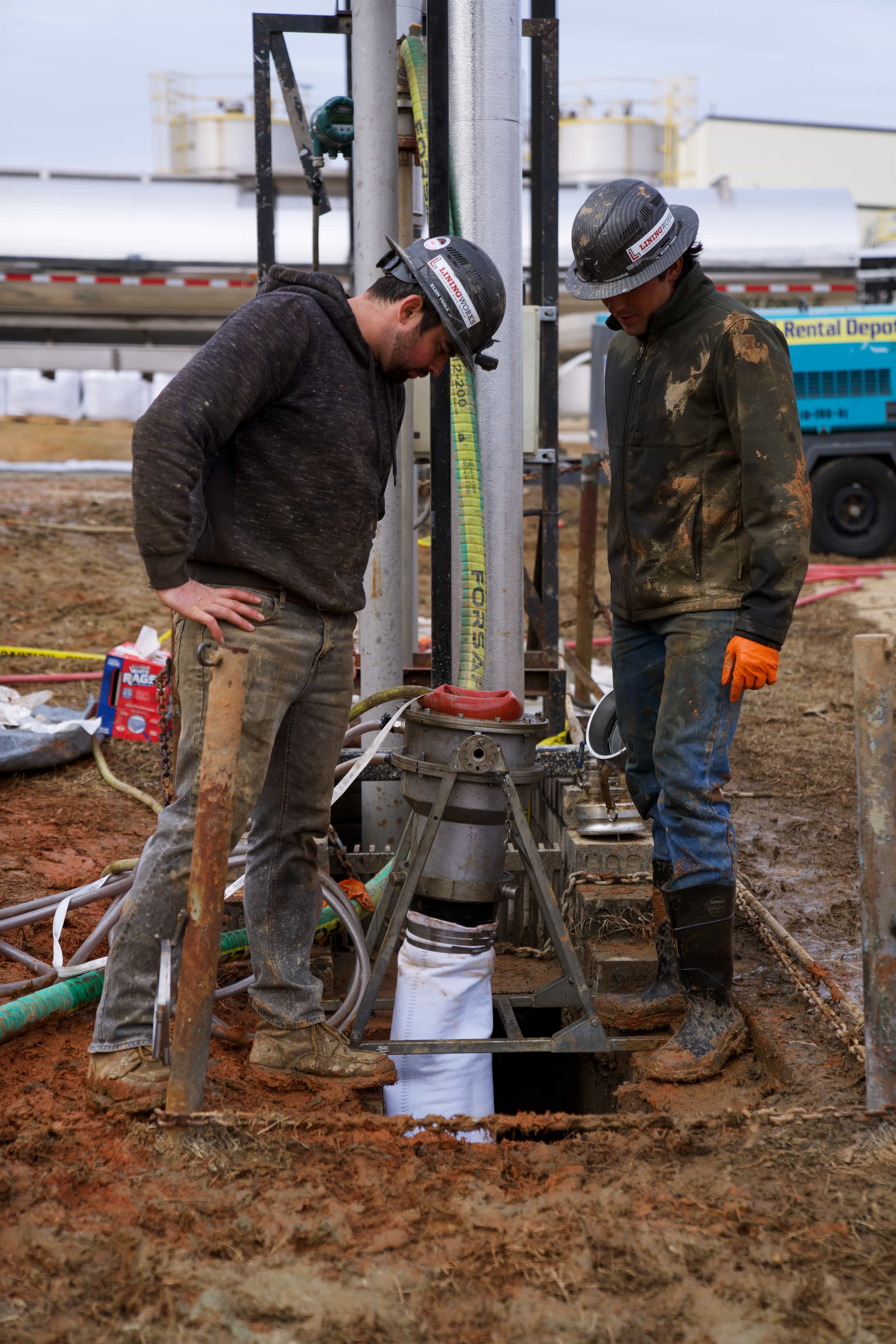
LiningWorks specified a structural CIPP liner designed for zero host pipe contribution under collector road loading and installed the liner through the headwalls with the road open to traffic. Post-installation camera confirmed full liner bond throughout. The road was returned to unrestricted use immediately after liner cure.
J
Municipal Public Works Director
Triad Region Municipality · Google
G
★★★★★
“65% invert wall thinning in a 30-inch CMP under an active collector road. Complete replacement would have required full road closure and weeks of excavation. LiningWorks lined it through the headwalls with the road open. Structural documentation provided at close-out. Problem solved.”
Every review below is posted directly on Google by verified customers.
BM
Brad Moore
North Carolina
We had a plumbing emergency around the holiday's and called a local plumbing company. They cleared the line and quoted a pretty high price to dig up my yard and fix the damaged sewer line. The next day I found LiningWorks online and called Jeremiah. He was very helpful and confident they could fix my sewer line without digging. Seemed too good to be true. The lining has been installed, yard not damaged and looks to have resolved the break. Jeremiah even offered to come back and scope it at a later time to ensure it's all good. Highly recommend Lining Works for any situation where you can't or don't want to dig. Thanks guys!
RB
Ron Berardi
North Carolina
LiningWorks was top notch. We had a sewer main that got damaged and was completely blocked up. They were able to clear the drain, remove all issues, and reline the entire sewer main without cutting out my driveway and yard. And they were able to get the job done in one day. I would and plan to do business these guys again in the future and would highly recommend them to others.
CW
Cole Why
North Carolina
Where do I begin? Let's just say I had an absolute nightmare on my hands for about 5 years with my sewage. I had one company quote me 7k after he snaked my sewage line and from there I just kept snaking it every year. I dreaded the oncoming financial disaster but I bit the bullet and called LiningWorks. BEST home decision of 5 years. Jeremiah came out and tackled this chaos with grace and integrity. He got down to the root of it — after years of money, anxiety, and frustration he found out it was a city problem! I will definitely be calling LiningWorks when my lining needs replacing. Call them now, you will not be disappointed.
MG
Martin G
North Carolina
Hired them to redo the pipes at my home because they were old. They were very polite, answered all my questions thoroughly and did an AMAZING job. Jeremiah was the very best that I could ask for and highly recommend his services. Extremely satisfied with the work done. Thanks again Jeremiah!
JB
James Buffington
North Carolina
I am very happy with the work that was done and the clean up after the job was done. Jeremiah and Ralph are very professional and skilled in their craft. I received an estimate and the job did exceed the original estimate. I contacted them about it and they were very understanding and explained why.
GS
Garret S.
North Carolina
Lining Works was excellent to work with. They were perfectly professional. They were organized, efficient, and friendly throughout the whole process. They took time to answer all of our questions. Pipe lining is an incredible option and the team at Lining Works couldn't have been better. They were also transparent, honest, and consistent with their cost/pricing. We couldn't be happier. We feel very fortunate that we found Lining Works. Great guys!
NO
Nate O.
North Carolina
The main drain line in our airbnb kept clogging up, filling the house with an awful sewage smell. We had drain cleaners come out to clear the line every couple months but it finally got so bad we had to close off our bookings. LiningWorks were very prompt in coming out. We discovered tree roots had broken up our line. Our sewage line runs under a tree and 6ft deep through our crawlspace so digging it up was going to be a nightmare. Liningworks was able to cut the tree roots out and line the pipe without any digging so that it's as good as new. Would definitely recommend them to anyone needing sewage line repair.
JL
Justin L.
North Carolina
Lining Works responded to my request quickly and fixed my drain problem very fast. I would highly recommend you give them a call.
Engineering-based structural corrosion rehabilitation for storm drain systems.
Storm drain corrosion rehabilitation requires accurate wall-loss assessment, engineering-based liner specification, and documentation — LiningWorks provides all three.
Camera inspection quantifies wall loss for accurate liner specification
Pre-installation inspection documents corrosion severity and remaining wall thickness — providing the data needed to specify liner thickness for structural sufficiency.
Structural liners designed per ASTM F1216 for fully deteriorated pipe
Structural liner thickness is calculated to carry full loading with zero host pipe contribution — providing full structural rehabilitation for severely corroded storm drain pipe.
Installation through existing headwalls and manholes — no road closure in most applications
Structural CIPP installation in culvert applications is typically performed through headwalls — without road closure, lane restrictions, or pavement restoration.
Engineering documentation package for municipal and property records
Liner design calculations, material certifications, and post-installation CCTV — complete documentation for municipal records and future infrastructure asset management.
Get storm drain corrosion rehabilitation started in three steps.
Camera measures wall loss — structural liner is specified for the actual corrosion conditions.
01
Call and describe the pipe system and known conditions
336-477-3218, Mon–Sat 7AM–6PM. Pipe material, age, diameter, loading conditions, and known corrosion history — describe the system and we'll schedule the right structural assessment.
02
Camera and inspection assess corrosion severity and CIPP viability
We scope the full run, document corrosion severity and wall loss, confirm CIPP viability, and specify structural liner thickness based on actual measured conditions.
03
Structural CIPP lining with engineering documentation
Heavy-wall structural liner installed through existing access. Post-installation CCTV verification. Engineering documentation package at project close-out for municipal and property records.
Let’s talk about something most homeowners would rather not: what’s going on under your lawn. You’ve got this quiet, shady maple out front. Maybe you’ve even named it—something cha
If you’re reading this, chances are something’s not quite right under your feet. Maybe the drains are backing up. Maybe the yard smells like something crawled down there and gave u