Cast Iron Pipe Repair without ripping out the pipe that's already there.
Cast iron was built to last — but not forever. If your home was built before 1980, those original drain pipes are likely corroded, scaled, and cracking from the inside out. LiningWorks uses trenchless CIPP lining to seal and strengthen failing cast iron without demolishing your floors, walls, or yard.
Free phone consultation. Flat-rate pricing. No upsells, ever.
We'll call you back within one business hour. No automated systems.
WHAT IT IS
Your cast iron pipes are aging. Lining them is the smarter fix.
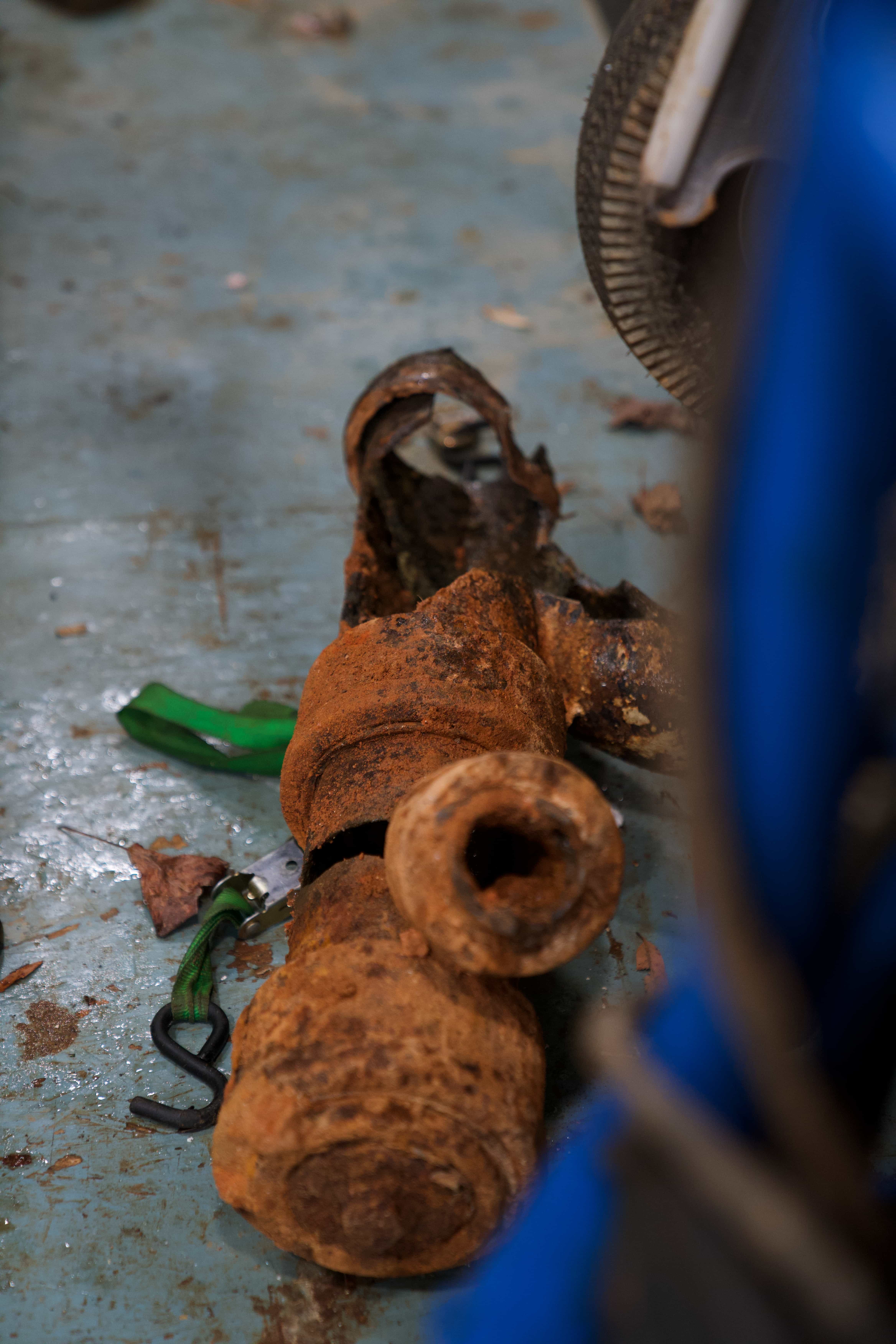
Cast iron drain and sewer pipes installed in mid-century homes across Charlotte, Greensboro, and Winston-Salem were excellent for their time — dense, durable, quiet. But after 50-plus years underground, inside concrete slabs, and behind walls, they develop scale buildup that restricts flow, corrosion that eats through walls from the inside, and joint failure that allows groundwater infiltration and root entry.
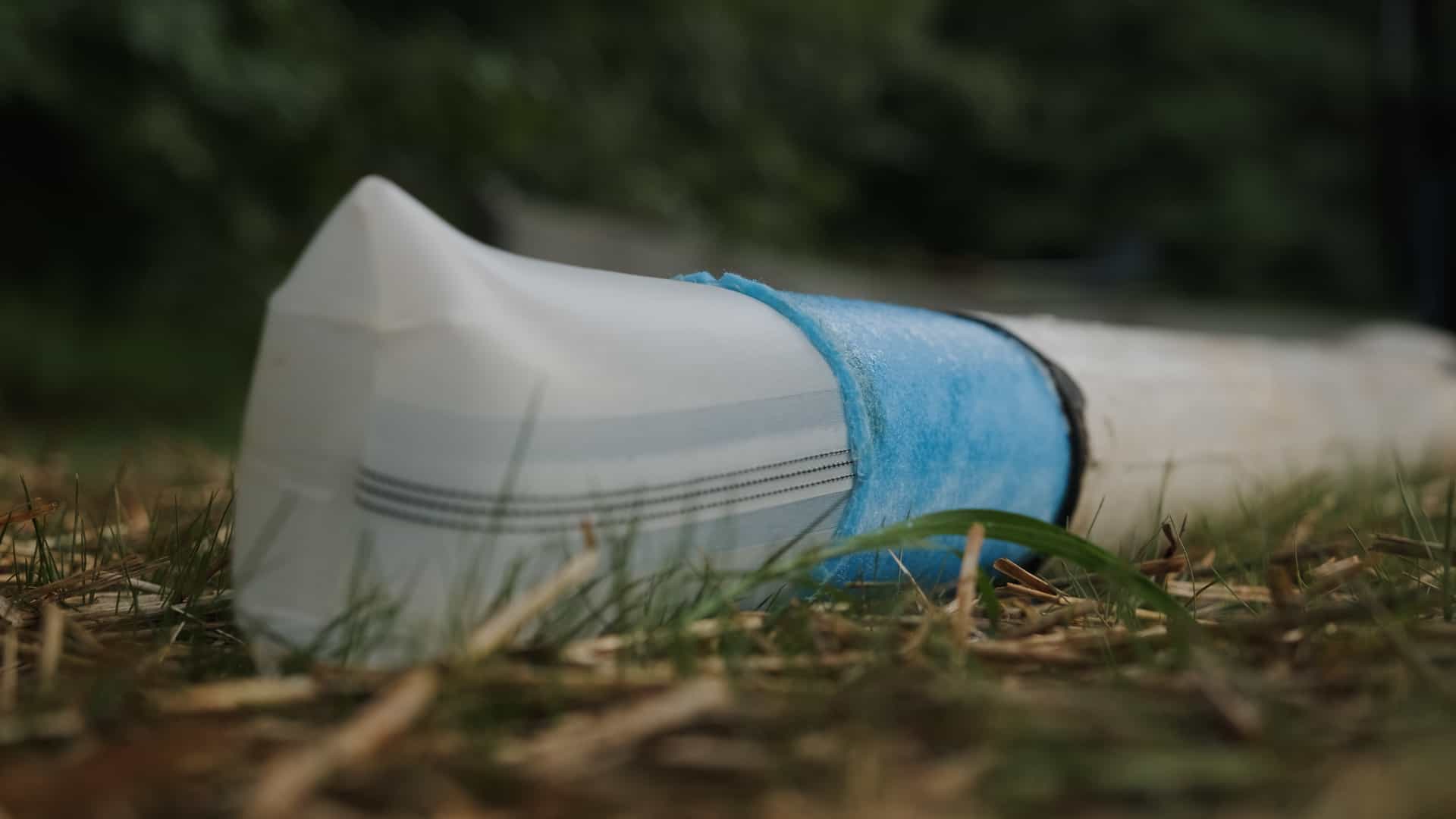
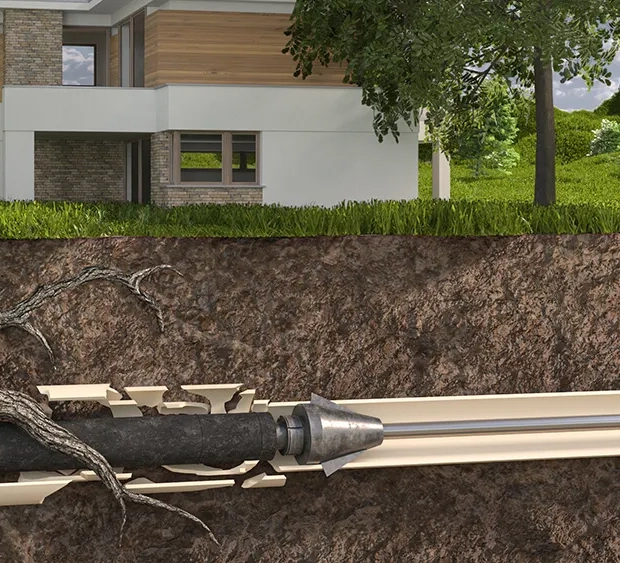
Full replacement means cutting concrete slabs, opening walls, and restoring finished surfaces — a multi-day project with five-figure costs. CIPP (cured-in-place pipe) lining rehabilitates the same pipe from the inside. A resin-saturated liner is inserted through your cleanout, inflated against the cast iron wall, and cured into a smooth, seamless structural pipe. The result is a 50-year liner inside the old pipe — installed in hours, not days.
Four signs your cast iron pipes are telling you it's time.
Cast iron failure is gradual — until it isn't. These are the signs LiningWorks looks for during a camera inspection on pre-1980 homes.
Recurring slow drains across multiple fixtures
Scale and corrosion narrow the pipe interior over decades, reducing flow. Snaking gives temporary relief but doesn't remove the buildup causing the restriction.
Rust staining in floor drains or slab areas
Oxidizing cast iron deposits orange-brown residue near cleanouts or floor drains. Visible staining often indicates internal corrosion is already severe.
Sewage odors with no visible leak
Cracked cast iron joints allow sewer gas to escape into crawlspaces, slabs, and basement spaces long before a full backup or visible leak occurs.
Home built before 1980
If your drain lines have never been inspected and the home is 40-plus years old, you almost certainly have cast iron that warrants a camera assessment before a problem becomes a crisis.
Our cast iron pipe repair process, start to finish.
Every cast iron repair starts with a thorough inspection. We never guess — we show you exactly what's happening inside your pipes before recommending a solution.
1. Camera inspection
We run a push-camera through your cast iron drain lines and record the full interior — scale deposits, corrosion pitting, cracked joints, bellied sections, and root intrusion all become visible on screen. You see exactly what we see.
2. Hydro jetting & prep
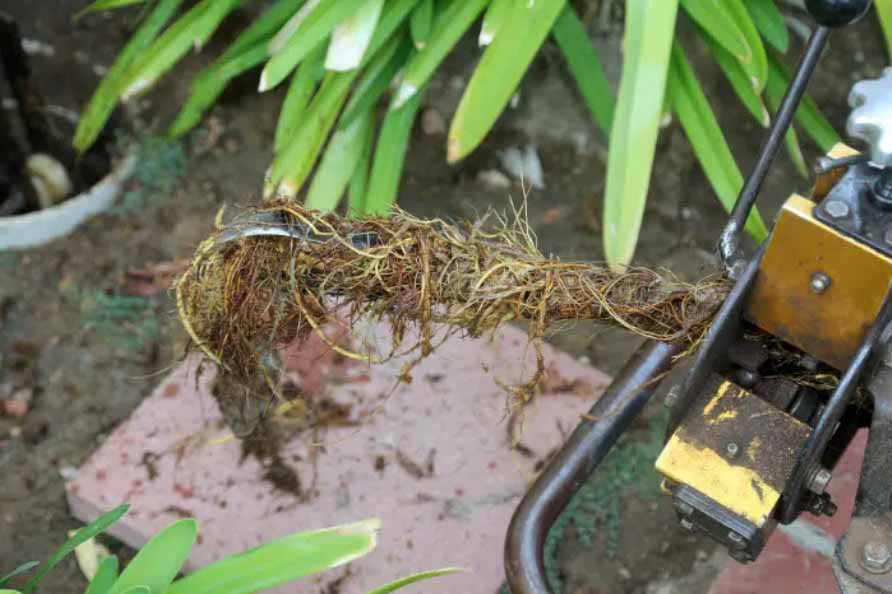
Before lining, we hydro jet the cast iron to remove scale deposits and debris. Clean pipe walls are critical for liner adhesion. If root intrusions are present, mechanical cutting clears them first, then hydro jetting follows.
3. CIPP liner installation
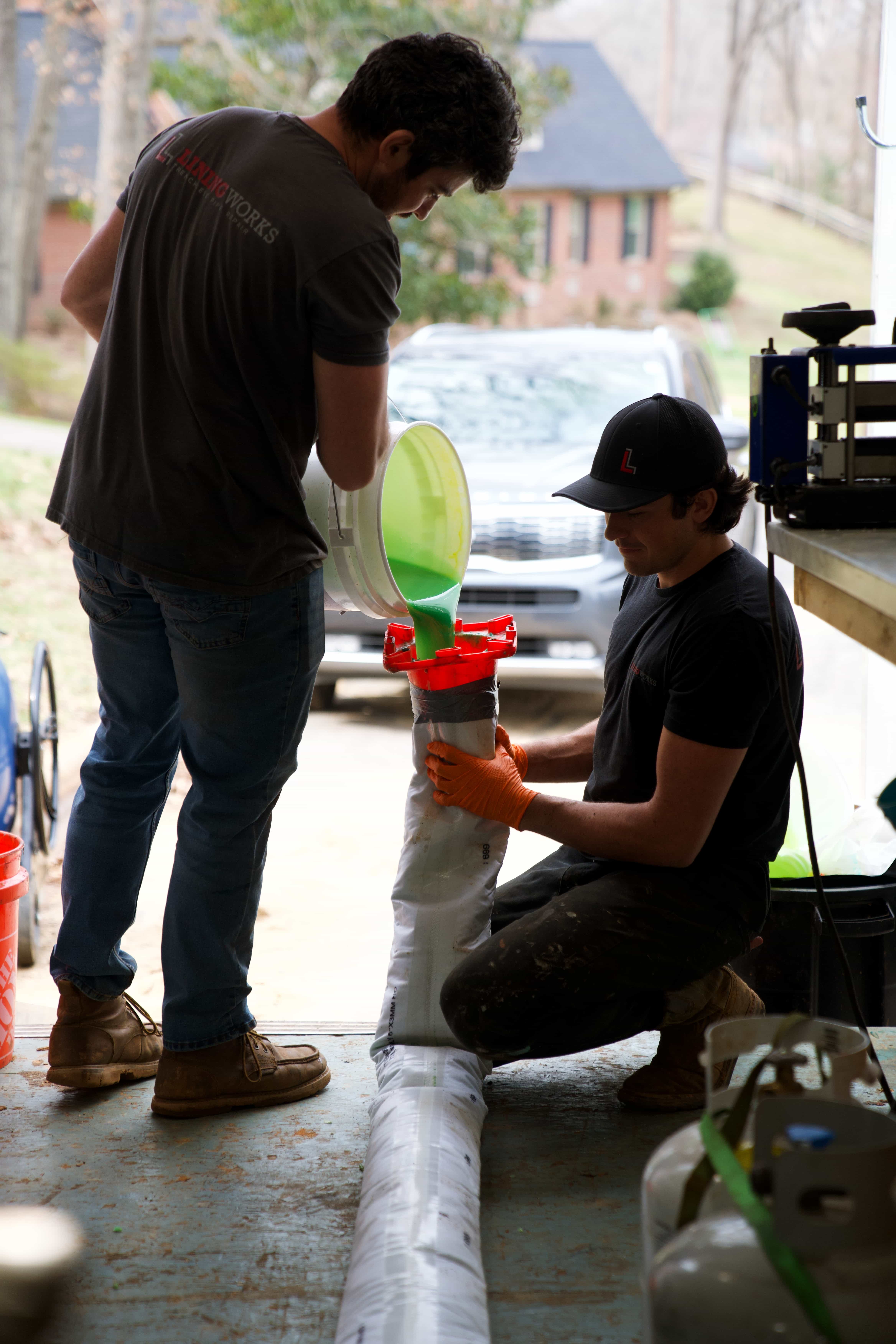
A resin-saturated felt liner is inverted or pulled into the cast iron pipe through an existing cleanout or access point. No open trench. No floor demolition. The liner conforms to the pipe interior and all joints, sealing every defect in one continuous pass.
4. Cure & verification
Hot water or ambient cure hardens the liner into a smooth, seamless structural pipe within hours. We run a post-installation camera to verify full adhesion and confirm no defects remain. Your cast iron pipes are now lined for 50 more years.
From corroded cast iron to a smooth 50-year liner — one visit.
A Myers Park Charlotte homeowner had a 1967 home with original cast iron drain lines that multiple plumbers said needed full replacement. One LiningWorks camera inspection, one day of CIPP lining — no tiles touched, no concrete cut.
P
Patricia Engel
3 Nov 2025 · Google
G
★★★★★
"Our house was built in 1967 and every plumber we called said the cast iron needed to be ripped out. LiningWorks showed us the camera footage, explained CIPP lining, and had the job done in one day. Not a single tile touched. That was six months ago and drains are perfect."
Cast iron specialists — not a general plumber with a liner kit.
CIPP lining for cast iron requires understanding decades of pipe deterioration patterns. We've assessed and lined hundreds of pre-1980 homes across the Carolinas and know exactly what failing cast iron looks like and how to restore it.
Same-day camera assessment
Camera inspection and full condition report in one visit. You'll know the extent of cast iron deterioration before we quote anything.
No slab demolition required
CIPP accesses the pipe through cleanouts and fixtures. No concrete sawing, no tile removal, no structural disruption to your home.
Flat-rate cast iron pricing
We quote cast iron CIPP jobs by the linear foot with no hidden fees for access, cleanup, or re-inspection. The price you approve is the price you pay.
50-year liner warranty
Every cast iron CIPP liner LiningWorks installs carries a 50-year structural warranty. It outlasts the original pipe and most of the homes we work in.
Three steps from corroded cast iron to a 50-year liner.
Most cast iron lining jobs are completed in a single day. Here's how the process works from your first call to a verified, camera-confirmed liner.
01
Call or text us
Reach us at 336-477-3218. Tell us about your cast iron symptoms — slow drains, rust staining, odors — and we'll schedule a camera inspection at a time that works for you.
02
Free camera inspection
We run our push-camera through every accessible cast iron line and give you recorded footage. You'll see the corrosion, scale, and joint condition firsthand — and receive a flat-rate quote on the spot.
03
Liner installed & verified
We prep the cast iron, install the CIPP liner, cure it, and run a post-installation camera to confirm a perfect result. Most jobs wrap up the same day — no re-visits, no guesswork, no slab demolition.
Let’s talk about something most homeowners would rather not: what’s going on under your lawn. You’ve got this quiet, shady maple out front. Maybe you’ve even named it—something cha
If you’re reading this, chances are something’s not quite right under your feet. Maybe the drains are backing up. Maybe the yard smells like something crawled down there and gave u